SBME Research Day
SBME Research Day is an opportunity for our community of faculty, trainees, and staff to come together, discuss SBME priorities, and share their research through a poster session, trainee talks, and lunch. Save the date! More event details to come.
Events
Calendar

Research Seminar: When good cells go bad: Causes and consequences of genetic changes in human pluripotent stem cells – Dr. Ivana Barbaric

Meeting ID: 693 4383 4453
Passcode: 608808
Location:
Lecture Theatre B1001, Gordon B. Shrum Building (SHRM)
Abstract:
Human pluripotent stem cells (hPSCs) are powerful tools for modeling early human embryogenesis and provide a crucial source of differentiated cells for regenerative medicine. Maintaining their genetic stability is paramount for both basic research and clinical applications. However, it is now well-documented that hPSCs acquire non-random genetic changes upon culture. Some of the acquired genetic aberrations are associated with a selective growth advantage in variant hPSCs and are also linked to oncogenesis in other contexts. This raises significant concerns about their potential to confer tumorigenic or malignant properties on transplanted differentiated cells or any residual undifferentiated hPSCs. Furthermore, such genetic changes can undermine basic research by leading to unpredictable results in disease modeling and developmental studies due to aberrant proliferation rates or altered differentiation abilities.
In this talk, I will present our ongoing work focused on elucidating the molecular mechanisms that underpin the maintenance of hPSC genome integrity. I will discuss how disruptions to these mechanisms can lead to undesired genetic changes. Moreover, I will also share our findings demonstrating that the dominance of genetically variant hPSCs in mosaic cultures is significantly enhanced through competitive interactions, leading to the elimination of wild-type cells. Ultimately, our work is informing novel approaches to minimize the occurrence of genetic changes in hPSC cultures, ensuring their reliability for both clinical and research use.
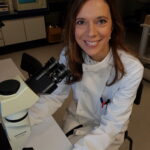
Dr. Ivana Barbaric‘s Biography:
Ivana Barbaric completed her DPhil at the University of Oxford in 2006. She then joined Professor Peter Andrews’ group at the University of Sheffield to study the mechanisms that underlie human pluripotent stem cell (hPSC) fate. She was appointed to a Group Leader position at the Centre for Stem Cell Biology, Sheffield in 2014. Her research is focused on the basic biology of hPSCs and their applications in disease modelling and cell therapy. In particular, her group is investigating the causes and consequences of genetic changes in hPSCs, including the impact of mutations on stem cell fate decisions and lineage specification during early development. Her work on culture-acquired genetic changes in hPSCs is also informing strategies for reliable detection and minimising the occurrence of genetically variant cells, necessary for safe and efficient clinical translation of hPSC-based therapies. As a member of the Steering Group of the ISSCR Task Force on Standards for Stem Cell Research, Ivana co-chaired the Working Group on Genomic Characterization of stem cells. She is Chair of the International Stem Cell Initiative, the General Secretary of the British Society for Gene and Cell therapy and a member of the ISSCR Manufacturing, Clinical Translation and Regulation Committee.
Ivana Barbaric – selected recent publications
1. Benvenisty N, Draper JS, Gokhale PJ, Healy L, Hewitt Z, Hursh D, Hodgson A, Ludwig TE, Mah N, McClelland SE, Mennecozzi M, Merkle FT, Mountford JC, Pera M, Prigione A, Rodriguez TA, Rossi A, Rouhani FJ, Saeb-Parsy K, Selfa Aspiroz L, Shakiba N, Spits C, Tonge PD, Barbaric I (2025) A call to action for deciphering genetic variants in human pluripotent stem cells for cell therapy. Cell Stem Cell 32(4):508-512.
2. Stavish D, Price CJ, Gelezauskaite G, Alsehli H, Leonhard KA, Taapken SM, McIntire EM, Laing O, James BM, Riley JJ, Zerbib J, Baker D, Harding AL, Jestice LH, Eleveld TF, Gillis AJM, Hillenius S, Looijenga LHJ, Gokhale PJ, Ben-David U, Ludwig TE, Barbaric I (2024) Feeder-free culture of human pluripotent stem cells drives MDM4-mediated gain of chromosome 1q. Stem Cell Reports, 19:1217-1232.
3. Beltran-Rendon C, Price CJ, Glen K, Stacey A, Barbaric I*, Thomas RJ* (2024) (*corresponding authors) Modeling the selective growth advantage of genetically variant human pluripotent stem cells to identify opportunities for manufacturing process control. Cytotherapy, 26:383-392. (*corresponding authors)
4. Vitillo L, Anjum F, Hewitt Z, Stavish D, Laing O, Baker D, Barbaric I, Coffey P (2023) The isochromosome 20q abnormality of pluripotent cells interrupts germ layer differentiation. Stem Cell Reports, 18:782-797.
5. Pernaute B, Sánchez Nieto J.M, Pérez-Montero S, di Gregorio A, Lima A, Lawlor K, Bowling S, Liccardi G, Tomás A, Meier P, Rutter GA, Barbaric I, Rodríguez TA (2022) DRP1-mediated regulation of mitophagy determines the apoptotic response upon embryonic differentiation. Developmental Cell, 57: 1316-30.
6. Price CJ, Stavish D, Gokhale PJ, Stevenson BA, Sargeant S, Lacey J, Rodriguez TA, Barbaric I (2021) Genetically variant human pluripotent stem cells selectively eliminate wild-type counterparts through YAP-mediated cell competition. Developmental Cell 56:2455-70.